Why bowl names don't help
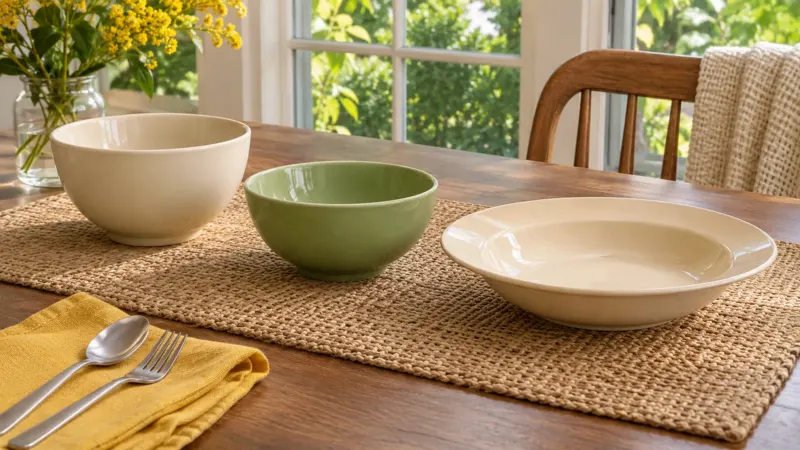
Shop for bowls online and you'll see "cereal bowl," "soup bowl," "pasta bowl" and "all-purpose bowl" used for pieces that hold anything from 12 oz to more than 40 oz. Those are product names, not sizes. One brand's cereal bowl can hold more than another brand's soup bowl.
Two numbers do tell you something:
- Width (inches)
- Tells you whether the bowl fits your cabinet shelf and how it looks on the table. It doesn't tell you how much food goes in: a wide, shallow pasta bowl and a narrow, deep noodle bowl can be the same width and hold very different amounts.
- Capacity (fl oz or ml)
- The number that matters for food. In the US it's usually given in fluid ounces, measured to the brim.
Brim capacity is the catch. Nobody fills a bowl to the rim, so a bowl rated at 16 oz comfortably holds less than 16 oz of soup.
Bowl capacity converted
One US fluid ounce is 29.57 ml, and one US cup is 8 fl oz (about 237 ml), per NIST Handbook 44.
| Listed capacity | Milliliters | US cups (to the brim) |
|---|---|---|
| 12 oz | 355 ml | 1½ |
| 16 oz | 473 ml | 2 |
| 20 oz | 591 ml | 2½ |
| 24 oz | 710 ml | 3 |
| 30 oz | 887 ml | 3¾ |
| 32 oz | 946 ml | 4 |
| 46 oz | 1,360 ml | 5¾ |
How food labels define one serving
Food makers in the US don't pick serving sizes freely. FDA rules (21 CFR 101.12) set a "reference amount customarily consumed" for each kind of food. Those amounts are a useful guide to how much a bowl needs to hold:
| Food | FDA reference amount per serving | How it shows on the label |
|---|---|---|
| Soup, all varieties | 245 g | In cups and ml |
| Mixed dishes you can measure with a cup (stews, mac and cheese, spaghetti with sauce) | 1 cup | 1 cup |
| Plain pasta | 140 g prepared (55 g dry) | In cups |
| Hot cereal (oatmeal, grits) | 1 cup prepared | In cups |
| Ready-to-eat cereal, light (under 20 g per cup) | 15 g | In cups |
| Ready-to-eat cereal, medium (20–43 g per cup) | 40 g | In cups |
| Ready-to-eat cereal, dense (43 g or more per cup) | 60 g | In cups |
| Ice cream | ⅔ cup | ⅔ cup |
Cold cereal is set by weight, not volume. A 40 g serving of a light flake takes up much more space than 40 g of dense granola, so a bowl that's plenty for one cereal can be tight for another, especially once you add milk.
Measure the bowls you already own
- Pick your usual bowlThe one you reach for most often.
- Fill it with water1 cup at a time with a liquid measuring cup, up to the rim. Count the cups: that's the brim capacity (1 cup = 8 oz).
- Pour your normal portionYour usual cereal pour plus milk, or a ladle or two of soup. See how far up it comes.
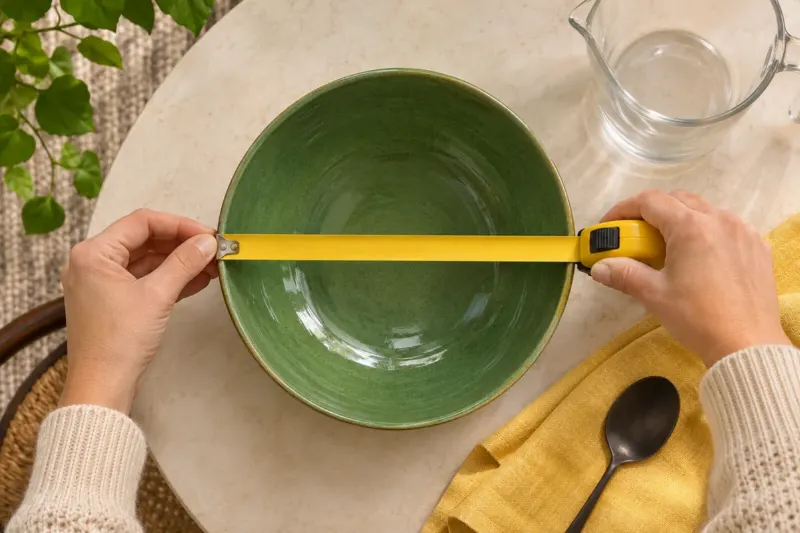
- Measure across the rimWith a ruler, for the width in inches.
- Shop by that numberLook for capacity near your step-2 number, not by name.
If your favorite bowl holds 3 cups to the brim and your usual soup fills it halfway, a 24 oz bowl is your size. A 30 oz bowl gives you more room for toppings or a bigger meal.
Questions people ask
What size should a cereal bowl be?
Start with your cereal. The FDA serving for most ready-to-eat cereals is 40 g, but that can be anywhere from a cup to well over a cup depending on how dense the cereal is. Then add milk. If your usual bowl overflows when you add milk, go up a size.
How large should a soup bowl be?
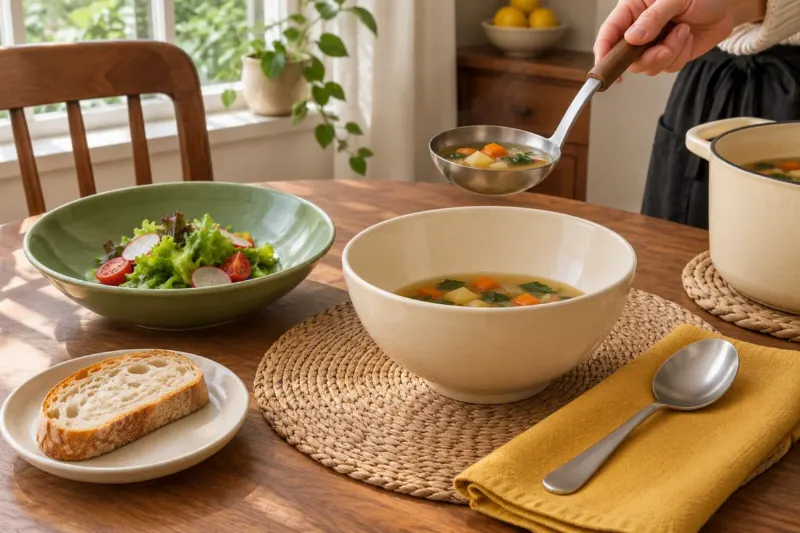
A labeled serving of soup is 245 g, about 1 cup (8 fl oz). A 12 oz bowl holds that with a little room to carry it. A 16–20 oz bowl leaves room for crackers, noodles or a second ladle. Meal-size soups with lots of add-ins call for 24 oz or more.
Are cereal bowls bigger than soup bowls?
Not reliably. Both are product names, and brands use them for overlapping sizes. Compare ounces, not names.
What size pasta bowl do I need?
A plain pasta serving on a label is 140 g cooked; pasta with sauce counts as a mixed dish, at 1 cup. Pasta bowls are usually wide and shallow so sauce spreads out. For a main course, look at capacity and width together. A wide bowl around 8 in across with 24–30 oz of capacity holds a full plate of pasta with room to toss it.
How big is a 32 oz bowl?
32 fl oz is 4 US cups, or about 946 ml, filled to the brim. That's a large serving bowl for one person or a small serving bowl for the table.
How many ounces is a normal bowl?
There's no single normal size. Use your own bowl as the benchmark (see the steps above).
Are ceramic bowls safe to eat from?
Ceramic tableware sold for food in the US falls under FDA limits for lead that can leach out of glazes. Decorative ceramics that aren't meant for food must carry a label saying so. The FDA's warnings focus mostly on traditional handmade pottery, some of it labeled "lead free," that still released lead in testing. If a piece is marked "not for food use" or "for decorative purposes only," don't serve food in it.
Can I put a ceramic bowl in the microwave?
Only if it's labeled microwave-safe. USDA food safety guidance says to use cookware made for microwave use and look for that label on glass and ceramic dishes. It also describes a quick test for unlabeled dishes: microwave the dish for 1 minute next to a cup of water. If the dish comes out warm or hot, don't use it in the microwave.
A 30 oz, 8-inch bowl in practice
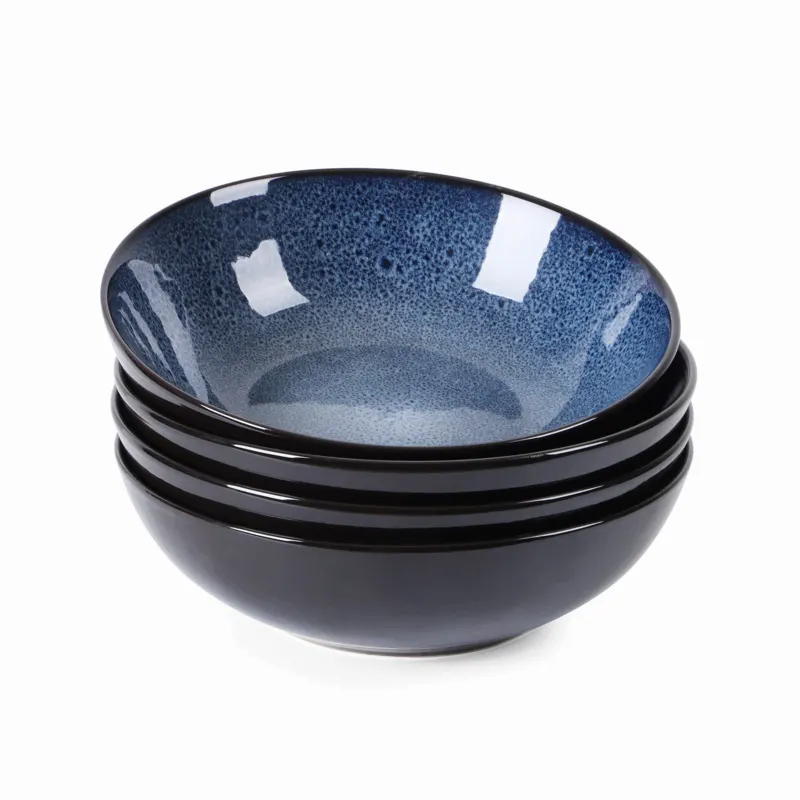
Our Peacock Blue Ceramic Bowls are 8 in across and hold 30 oz (about 890 ml) each. By the numbers above:
- About 3¾ cups to the brim, so roughly 3 labeled soup servings
- Room for a 1-cup mixed dish like stew or pasta with sauce, with plenty left for toppings
- Cereal plus milk without filling it to the rim
- Too roomy if you like small portions. Choose by your own measured bowl.
Sources
- FDA serving reference amounts, 21 CFR 101.12, Table 2
- NIST Handbook 44, Appendix C (US fluid ounce and cup)
- USDA FSIS, Cooking with Microwave Ovens
- FDA, Lead in Food and Foodwares
- FDA, Questions and Answers on Lead-Glazed Traditional Pottery
Sources checked November 3, 2026.