Satin vs silk at a glance
| Satin | Silk | |
|---|---|---|
| What the word describes | A weave: long yarn floats give one glossy side and one duller side | A natural protein fiber, most often from silkworm cocoons |
| What it can be made of | Silk, polyester, nylon and other filament fibers | Silk only |
| "Mulberry silk" | Not applicable | Silk from the mulberry silkworm |
| What the US label must say | Its actual fiber(s), by generic name and percentage | "Silk" and its percentage. A 97% silk item can't be sold as "100% silk." |
| Friction on hair compared with cotton | Lower, per dermatologists | Lower, per dermatologists |
| Proven skin or acne benefit | No published trial results found | No published trial results found |
Why the words get mixed up
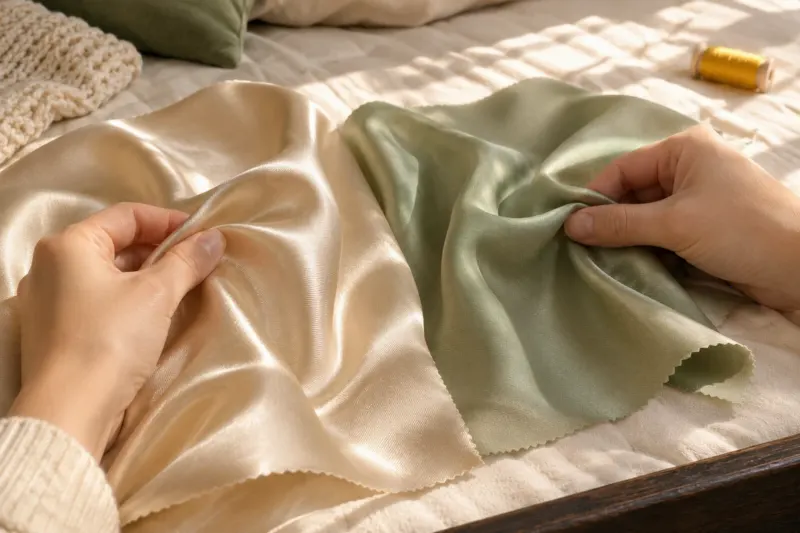
Satin was originally woven from silk, so for a long time the two words pointed to the same cloth. Today satin describes the weave, not the fiber. In a satin weave, yarns "float" over several crosswise threads before dipping under one. Fewer crossing points mean a smoother surface that reflects more light. That's where the shine and the slippery feel come from. When the same weave uses short cotton yarns, the fabric is usually called sateen instead.
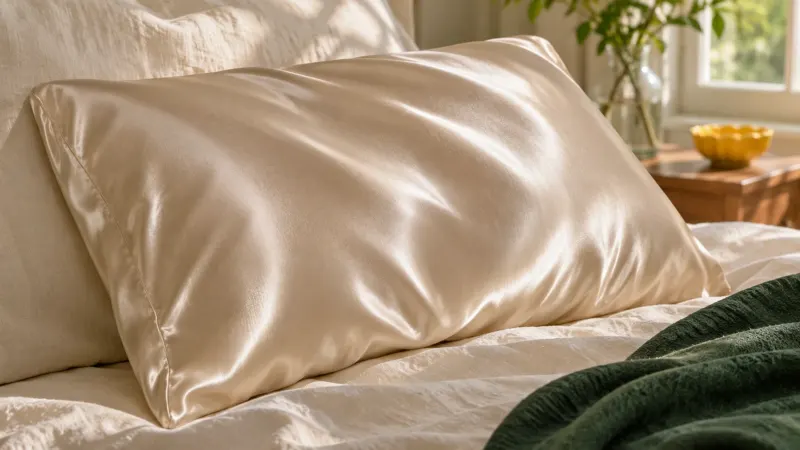
So "satin pillowcase" on its own tells you about the surface, not the material. The fiber could be silk, or a synthetic such as polyester.
Checking common claims
- "Both reduce friction on hair." Supported.
- University of Utah Health quotes a dermatologist saying silk or satin pillowcases "create less friction than cotton." The American Academy of Dermatology's curly hair tips also mention satin or silk bonnets and pillowcases.
- "Silk clears up acne." Not established.
- A randomized trial comparing silk with cotton pillowcases for acne was registered on ClinicalTrials.gov in 2023, but no results are posted there. We found no published results either way.
- "Satin is just fake silk." Half true.
- Polyester satin copies silk's look and slip, but it's a different fiber. Neither one is fake. Each just needs to be labeled for what it is.
- "Mulberry silk is a different fabric." No.
- It names the silkworm the fiber comes from. It's still silk.
- "Polyester satin can be called silky." Careful.
- FTC rules bar words that imply a fiber that isn't there, including names that sound like it or slightly misspell it.
The downsides of a satin pillowcase
The honest answer depends on the fiber:
- It may not breathe like natural fibers. Some sleepers find synthetic satin feels warmer through the night. That's personal comfort, not a measured rule, so try it for yourself.
- It's slippery. The pillow can slide around, and so can your sleep mask or bonnet. That's the point for hair, but some people find it annoying.
- Quality varies a lot. A thin, loosely woven satin can snag or lose its shine faster than a tightly woven one.
- The label may be vague. If a listing says only "satin" or "silky" and gives no fiber content, you don't really know what you're buying. US rules require the fiber content to be disclosed, so ask for it.
Silk has trade-offs too: its care label often asks for gentler washing. Always follow the care label on whichever you buy.
How to choose
- Find the fiber content lineOn a US label or listing it should name every fiber with a percentage. "Satin" alone isn't a fiber.
- Decide what you want it forLess friction on hair: satin and silk both qualify. A natural fiber: silk.
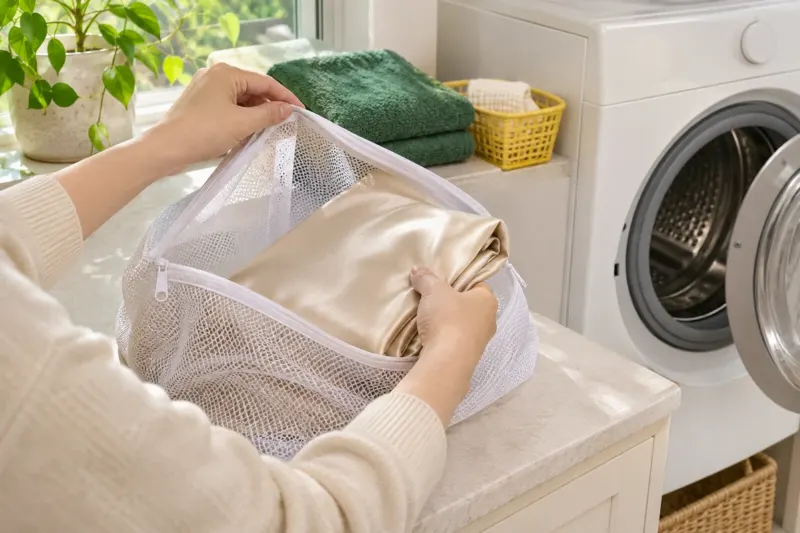
- Check the care labelAgainst how you actually do laundry. If you won't hand-wash, buy something whose label allows the machine.
- Measure your pillowPillowcase sizes vary by brand. Compare the case size with your pillow.
- Don't buy either to treat skinFor acne or other skin conditions, see a dermatologist.
Questions people ask
Is satin or silk better for your hair?
Both are smoother than cotton, and dermatologists mention both for reducing friction while you sleep. We found no head-to-head study showing one beats the other for hair.
Is satin or silk better for curly hair?
The American Academy of Dermatology suggests a loose "pineapple" ponytail or a loose braid at night, plus satin or silk bonnets or pillowcases, to reduce friction and frizz. It doesn't favor one fabric over the other.
What do dermatologists say about silk pillowcases for skin?
The dermatologist advice we found is about hair friction. For skin and acne there are no published trial results yet, so treat skin claims with caution.
Should you sleep on silk or satin?
Whichever you'll actually use and care for. Read the fiber content and the care label, and pick the one that fits how you wash.
Satin vs mulberry silk: what's the difference?
Mulberry silk is a fiber, silk from the mulberry silkworm. Satin is a weave that can be made from silk or synthetics. A "mulberry silk satin" pillowcase is silk woven in a satin weave.
Sources
- FTC, Threading Your Way Through the Labeling Requirements Under the Textile and Wool Acts
- 16 CFR 303.18, Terms implying fibers not present
- University of Utah Health, "Is It Bad to Sleep With Wet Hair?" (Sept. 2023)
- American Academy of Dermatology, "6 curly hair tips from dermatologists" (June 2022)
- ClinicalTrials.gov, NCT06142487, silk pillowcases and acne-prone skin
- Wikipedia, Satin (weave structure, satin vs sateen)
- Wikipedia, Silk (protein fiber; mulberry silkworm)
Sources checked November 3, 2026.