Why some bowls heat up and others don't
A microwave oven heats food, not the dish. The FDA explains that microwaves pass through glass, paper, ceramic and plastic, which is why those materials are used for microwave cooking. The food absorbs the energy and gets hot. The bowl mostly warms up from the hot food sitting in it.
Problems start when the bowl itself absorbs energy or can't handle the heat:
- Metal in the bowl or glaze. USDA says a dish that gets warm on its own in the test "contains metal in the material or glaze." Metal can also spark. The FDA says metal pans and aluminum foil shouldn't go in a microwave.
- Plastic that isn't made for heat. The FDA notes that some plastic containers can be melted by the heat of the food inside them.
- A bowl that's already damaged. Cracks and chips are weak points. Corelle tells customers to stop using stoneware that cracks and not to use glass dinnerware that's chipped, cracked or badly scratched.
Three checks, in order
1. Read the bottom. Glass, ceramic and plastic dishes that are safe to use "usually will be labeled for microwave oven use," according to USDA. The wording varies. You might see "microwave safe," a small microwave icon, or wavy lines. If the brand has a care page, check it too. Brands often list limits there, like no browning elements or no heating while empty.
2. Look at what it's made of and how it's decorated. A label isn't the only clue. Gold or silver rims, metallic paint and metal handles rule a dish out, whatever else it says. So does foam. Then check the condition: chips, cracks and crazing (a web of fine lines in the glaze) are reasons to retire a bowl from the microwave.
3. If there's still no answer, test it. Use the 1-minute test below. It works for glass and ceramic bowls with no marking. It isn't a way to clear plastic tubs or takeout containers. USDA lists those as not safe no matter how they test.
What can and can't go in the microwave
This table follows USDA's own lists. Where it says "only if labeled," that's our summary of USDA's rule to use cookware made for microwave use.
| Bowl or container | Microwave? | Why |
|---|---|---|
| Any dish labeled for microwave use | Yes, as labeled | USDA: "Any utensil labeled for microwave use" is safe to use |
| Heatproof glass (Pyrex, Anchor Hocking type) | Yes | Listed by USDA as safe |
| Glass-ceramic (Corning Ware type) | Yes | Listed by USDA as safe |
| Plain ceramic or stoneware with no label | Test first | Glazes can contain metal; the 1-minute test checks for it |
| China with metallic paint or trim | No | USDA "not safe" list |
| Foam bowls, cups and trays | No | USDA "not safe" list |
| Margarine tubs, yogurt and cottage cheese cartons | No | USDA: not approved for cooking; chemicals can migrate into food |
| Takeout containers with metal handles | No | USDA "not safe" list |
| Metal bowls and pans, including stainless steel pet bowls | No | USDA and FDA: metal shouldn't go in the microwave |
| Anything that warped or melted while heating | No | USDA: don't eat food heated in it |
| Plastic not labeled for microwave use | Don't | USDA and FDA say to use cookware made for the microwave; some plastics melt |
The 1-minute dish test at home
This is the test USDA describes for dishes with no label. You need a glass measuring cup and tap water.
- Pour 1 cup of tap water into a glass measuring cup.
- Put the empty bowl in the microwave next to the cup. They shouldn't touch.
- Heat on high for 1 minute.
- Carefully touch the bowl, not the water. The water will be hot.
- Bowl cool: it passed. Microwaves went through it and into the water.
- Bowl warm or hot: don't use it in the microwave. USDA warns that the dish or the floor of the oven could crack if you keep microwaving it.
Why the water matters: the cup gives the microwave energy something to go into. Corelle tells customers not to heat an empty dish in the microwave, so don't run the test without it.
Even a microwave-safe bowl has limits
A pass on the test, or a label, doesn't mean anything goes. These come from the FDA and from Corelle's own care instructions:
- Don't heat it empty. Corelle says an empty dish can get too hot to handle, crack or break.
- Avoid sudden temperature changes. Corelle says stoneware heated or cooled too fast can break. It advises against going straight from freezer to microwave, adding cold liquid to a hot dish, or setting a hot dish on a wet surface.
- Don't heat a tiny portion in a big dish. Corelle lists this as a "do not" for both its glass and stoneware.
- Watch plain water. The FDA warns that water heated by itself in a clean cup can superheat and erupt when you move it. Don't heat liquids longer than the oven maker recommends.
- Retire cracked or chipped bowls. Corelle's rule is to stop using them.
- Use a potholder. The bowl warms up from hot food, even when it passes the test.
Questions people ask
How do I know my bowl is microwave safe?
Check the bottom for a microwave-safe label or symbol and follow it. If there's nothing there, and the bowl is glass or ceramic with no metal trim, run USDA's test: 1 minute on high next to a cup of water. A bowl that stays cool passes. A bowl that's warm or hot fails.
What bowls cannot be microwaved?
USDA's "not safe" list includes foam bowls, china with metallic paint or trim, metal pans, takeout containers with metal handles, and cold-storage containers like margarine tubs and yogurt or cottage cheese cartons. Add anything cracked or chipped, and any container that warped or melted the last time you heated it.
Are ceramic bowls microwave safe?
Many are, but not all. The FDA lists ceramic among the materials microwaves pass through. A metallic glaze or a gold or silver rim changes that. Check the label, then test unlabeled pieces. Pottery labeled "not for food use" or "for decorative purposes only" shouldn't hold food at all. The FDA requires decorative ceramics containing lead to carry a warning label.
What is the best bowl for the microwave?
A bowl labeled for microwave use. USDA also names heatproof glass and glass-ceramic as safe. Pick a size that fits your portion, since Corelle advises against heating a small amount of food in a large dish. Our bowl sizes guide shows how to match capacity to a serving. Our other guides cover jewelry, bags and bedding.
Is a dishwasher-safe bowl also microwave safe?
Not necessarily. They're two separate claims. Look for each one on its own, or test the bowl for the microwave. Fabric works the same way: a pillowcase's fiber line and its care symbols are separate, as our satin vs silk and washing guides explain.
Can I microwave a bowl with a gold or silver rim?
No. USDA lists china with metallic paint or trim as not safe for the microwave.
A question about an order, or about who we are? Our store FAQ covers it.
From our store
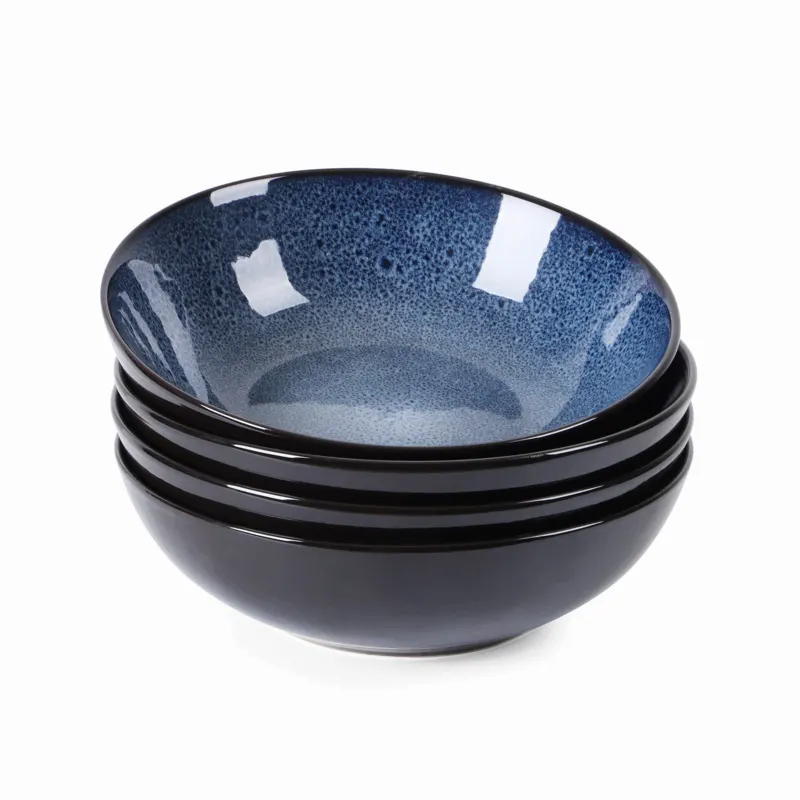
Peacock Blue Ceramic Bowls, set of 4. Each bowl is 8 in wide and holds 30 oz to the brim (about 26 oz for everyday use), with a reactive glaze. This listing doesn't state whether the bowls are microwave safe. Run the 1-minute test above before you microwave one, or contact us and ask first. Browse more in Kitchen & Dining, or search all of Shoujia Mall. Shipping to the 48 contiguous states is already in the price (shipping details), you pay by card at checkout (payment), and if a bowl arrives chipped or cracked, our returns policy covers a replacement or refund.
Sources
- USDA FSIS, Cooking with Microwave Ovens (safe and not-safe container lists; dish test)
- FDA, Microwave Ovens (materials microwaves pass through, plastics that melt, metal, superheated water)
- Corelle, Product Warranties / Safety and Usage (glass and stoneware microwave do's and don'ts)
- FDA, Lead in Food and Foodwares (labeling for ornamental and decorative ceramicware)
Sources checked November 3, 2026.